четвер, 15 жовтня 2020 р.

7D Pace Work 16.10.20

Морфологічна побудова слова в англійській мові

T.: Today we'll learn about endings in English. We are going to do some tasks to improve your knowledge.

1. Presentation of new material
T.: Now, let's learn some new concepts on the topic.
I'll give you the cards (card#1). You have to read and study the rules.
Word-formation – the process of forming words by combining root and affixal morphemes according to certain patterns specific for the language (affixation, composition), or without any outward means of word formation (conversion, semantic derivation).
●       Is a branch of science of the language, which studies the patterns on which a language forms new lexical items (new unities, new words)
●       It’s a process of forming words by combining root & affixal morphemes.
●       According to certain patterns specific for the language or without any outward means.
(conversion)
2 major groups of word formation:
1) Words formed as grammatical syntagmas, combinations of full linguistic signs (types: compounding (словосложение), prefixation, suffixation, conversion, and back derivation)
2) Words, which are not grammatical syntagmas, which are not made up of full linguistic signs.
Common for both groups is that a new word is based on synchronic relationship between morphemes.
Different types of word formation:
COMPOUNDING is joining together 2 or more stems.
Types:
1) Without a connecting element
    headache, heartbreak
2) With a vowel or consonant as a linking element
     speedometer, craftsman
3) With a preposition or conjunction as a linking element
    down-and-out (в ужасном положении, опустошенный)
    son-in-law
PREFIXATION
●       Prefixes are such particles that can be prefixed to full words. But are they not with independent existence.
●       Native prefixes have developed out of independent words; there is a small number of them.
   a-
   be-
   mid-
   fore-
   mis-
SUFFIXATION
●       A suffix is a derivative final element, which is or was productive in forming new words.
●       It has semantic value, but doesn’t occur as an independent speech use.
●       The contact of English with foreign languages has led to the adoption of countless foreign words, which started to be used in word building.
→ we have many hybrid types of derivatives.

A hybrid is a word different element of which are of etymologically different origin.
2 groups:
1) A foreign word is combined with a native affix
     - full
     - less
     - ness
       clearness, faithless, faithful
2) Foreign affixes are added to native words
     - ance
     - al
     - ity
     - able
CONVERSION
(zero derivation)
●       A certain stem is used for the formation of a categorically different word without a derivative element being added.
     Bag – to bag
     Back – to back
     Bottle – to bottle
●       This specific pattern is very productive in English
●       The most popular types are noun → verb or verb → noun
  2. Writing
T.: You have some cards
1)  Find the opposites of the words on the right and write them down (card#2).
2) Link the verbs with their correct suffix to form NOUNS and write them down. Follow the example and be careful with the spelling (card#3).
3) Add a PREFIX and/or SUFFIX to the words below and put them in the correct sentence (card#4).

2. Reading
  T.: Please, complete this paragraph using noun forms of these words (card#5). Then be ready to read the text.

vary
assess
involve
establish
evident
There is good reason to suppose that the_____________  of schools that cater for children with behavioral disorders will alleviate this problem. As it stands, these children often cause a wide ___________  of problems in the classroom that teachers cannot deal with and the ________ suggests that special schools might be able to provide a solution. One proposal is that parents should, where possible, have much more direct _________   in what happens in the classoom. It has even been suggested that they should help with the formal _______-----of the children.

So, thank you for your hard work! You have been very active! The lesson is over.


Card#1
Read and study the rules:


Card#2
Find the opposites of the words on the right and write them down (card#2)
POSSIBLE

LOYAL

HONEST

REGULAR

LEGAL

COMPLETE

REPLACEABLE

EFFECTIVE

POPULAR

FORTUNE

DIFFERENT

KIND

Card#3
Link the verbs with their correct suffix to form NOUNS and write them down. Follow the example and be careful with the spelling.

a) IMAGINE              1. -ance           g          ASSISTANCE
b) WEAK                   2. -ity                         
c) TEACH                  3. -ation                     
d) INFECT                 4. -sion                       
e) DECIDE                 5. -ence                      
f) ARGUE                  6. -er                          
g) ASSIST                  7. -al                          
h) SECURE                8. -ance                      
i) REFUSE                 9. -ment                     
j) OCCUR                  10. - ion                     
k) RESIST                  11. -ness                    


Card#4
Add a PREFIX and/or SUFFIX to the words below and put them in the correct sentence.

PROBABLE     COMMUNICATE     AGREE     CURIOUS     ANGER     HEALTH
     RESPONSIBLE     FAME     HELP     LIKE     CAREFUL     CONCLUDE

a) The lights are green, but nobody is moving. He is so  (adjective)

b) Don't you know that saying " killed the cat?"   (noun)

c) I think you should drive more . You're scaring me.  (adverb)
d) She is a very  TV star.  (adjective)
e) They have different opinions on the subject. Their  will last forever.  (noun with a negative meaning)
f) Brian is always late for work. He is so  . (adjective with a negative meaning)
g) This Math problem is very difficult. Mary didn't come to any   .  (noun)
h) He can't see the banana peel. He will  slip and fall. (adverb)

i) You shouldn't eat so much junk food. It's very .   (adjective with a negative meaning)
j) Thanks for finding my cat. You're a very youn  g man.  (adjective)

Card#5
Complete this paragraph using noun forms of these words.
vary
assess
involve
establish
evident
There is good reason to suppose that the_____________  of schools that cater for children with behavioral disorders will alleviate this problem. As it stands, these children often cause a wide ___________  of problems in the classroom that teachers cannot deal with and the ________ suggests that special schools might be able to provide a solution. One proposal is that parents should, where possible, have much more direct _________   in what happens in the classoom. It has even been suggested that they should help with the formal _______ of the children.


середа, 14 жовтня 2020 р.

3D 15/10/20

 Theme: When is Your Birthday?

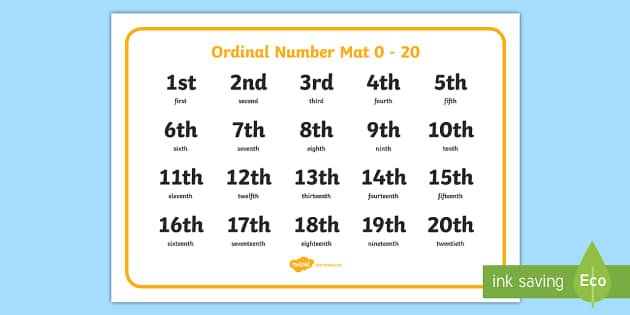
1. Review the ordinal numbers:


2. Listen, fill in and read.

ex.1p.19

3. Ex.2 p.19 -Copy in the copybooks.

Homework:Find out and write down when the birthdays of your family members are.

Model:  My Mom has birthday in July.

3D PACE WORK 15.10.20


Тема: Людина та суспільство.

Конференция Zoom Елена Андалюкевич
Время: 15 окт 2020 12:30 PM Киев

Подключиться к конференции Zoom
https://us04web.zoom.us/j/73769276608?pwd=Yi9PYW9SL0N4UWJpYWpoWTRvNlV4UT09

Идентификатор конференции: 737 6927 6608
Код доступа: k8GcSF


The topic of our lesson is called “People in society”. We are going to learn new words, to read the story about people in society and at the end of the lesson you will present your oral reports.


 [g].

Repeat the words after me: goose, gus, goes.

Gus goes by Blue Goose bus.


Community-спільнота

Neighbour-сусід

Policeman

friend

fence -паркан

law-закон

rule-правило


Read the texts fom Social Studies 11, translate and do the tasks after the text


7D PACE WORK 15.10.20


Wednesday, the fifth of May.

Theme: Types of Bees.

Lesson 1

Today we are going to learn about bees and various types of bees.

     T.: In order to understand the topic better, it is important to learn new words. Look at your lexical cards. (card#1)

  • System: pattern, method
  • Hive: bee home
  • Starve: to become ill or even die because of a lack of food
  • Larvae: baby insects
  • Nutrients: compounds in food that help you grow and stay healthy


Reading

T.: Let's read the text “Kinds of Bees”

“Kinds of Bees”


Bees are flying insects closely related to wasps and ants, and are known for their role in pollination and for producing honey and beeswax. Bees are a monophyletic lineage within the superfamily Apoidea, presently considered as a clade Anthophila. There are nearly 20,000 known species of bees in seven to nine recognized families,[1] though many are undescribed and the actual number is probably higher. They are found on every continent except Antarctica, in every habitat on the planet that contains insect-pollinated flowering plants.

Bees are adapted for feeding on nectar and pollen, the former primarily as an energy source and the latter primarily for protein and other nutrients. Most pollen is used as food for larvae.

Bees have a long proboscis (a complex "tongue") that enables them to obtain the nectar from flowers. They have antennae almost universally made up of 13 segments in males and 12 in females, as is typical for the superfamily. Bees all have two pairs of wings, the hind pair being the smaller of the two; in a very few species, one sex or caste has relatively short wings that make flight difficult or impossible, but none are wingless.

Tiny stingless bee species exist whose workers are less than 2 mm (0.079 in) long.[2] The largest bee in the world is Megachile pluto, a leafcutter bee whose females can attain a length of 39 mm (1.5"). Members of the family Halictidae, or sweat bees, are the most common type of bee in the Northern Hemisphere, though they are small and often mistaken for wasps or flies.

The best-known bee species is the European honey bee, which, as its name suggests, produces honey, as do a few other types of bee. Human management of this species is known as beekeeping or apiculture.

Bees are the favorite meal of Merops apiaster, the bee-eater bird. Other common predators are kingbirds, mockingbirds, beewolves, and dragonflies.


Lesson 2

Let’s divide into four groups, while reading the text, make up questions to the text using new items.

Post-reading task

2. Speaking

     T.: Now, let’s answer your questions. The first group asks its question to the second group, then the second group asks the question to the third group and so on.

3.Writing

     T.: You have got the cards and your task is to fill in the blanks with the right answers (card #2):

1. In ________ scientists discovered that three genera of native bees have evolved to open flower buds of the native mistletoe Peraxilla tetrapetala.

NauruAustralia

New Zealand

United Kingdom


2. Thus while ________ have been found to be about ten times more efficient pollinators on cucurbits, the total efficiency of a colony of honey bees is much greater due to greater numbers.

Bumblebee

Pollination

Insec

Arthropod


3. What kind of animal is a Bee?

 Perciformes

 Ostreoida

 Hymenoptera

 Even-toed ungulate


4. Bees are the favorite meal of Merops apiaster, the ________ bird.

Bee-eaterGreen

Bee-eater

Blue-cheeked

Bee-eater

Purple-bearded

Bee-eater


  1. What classis does Bee belong to?

 Planctomycetia

 Phylactolaemata

 Insecta

 Insecta


Lesson 3

Card #1

Read and translate new item:

  • System: pattern, method
  • Hive: bee home
  • Starve: to become ill or even die because of a lack of food
  • Larvae: baby insects
  • Nutrients: compounds in food that help you grow and stay healthy

Card #2

Fill in the blanks with the right answers (card #2):

1. In 3. ________ scientists discovered that three genera of native bees have evolved to open flower buds of the native mistletoe Peraxilla tetrapetala.

NauruAustralia

New Zealand

United Kingdom


2. Thus while ________ have been found to be about ten times more efficient pollinators on cucurbits, the total efficiency of a colony of honey bees is much greater due to greater numbers.

Bumblebee

Pollination

Insec

Arthropod


3. What kind of animal is a Bee?

 Perciformes

 Ostreoida

 Hymenoptera

 Even-toed ungulate


4. Bees are the favorite meal of Merops apiaster, the ________ bird.

Bee-eaterGreen

Bee-eater

Blue-cheeked

Bee-eater

Purple-bearded

Bee-eater


  1. What classis does Bee belong to?

 Planctomycetia

 Phylactolaemata

 Insecta

 InsectaКлас: 7-Д

Дата: 15/10/20

Тема: Прибуття пілігримів до Америки.

Who were  Pilgrim ancestors who came to America on the Mayflower in 1620?

Who helped the Pilgrims in America?

 What is the name of the ship that brought the Pilgrims to America?

Main part

 Now, let's learn some new items on the topic.

I'll give you the cards ( card #1 ) with new words. You have to read and translate them.


the Pilgrims (a person who undertakes a journey to a sacred place as an act of religious devotion; a person who goes on a journey),

  • the Mayflower (the Mayflower the ship in which the Pilgrim Fathers sailed from Plymouth to Massachusetts in 1620),
  • Plymouth (an important place in the new world).

  Reading

T.: Now we are going to read and translate the text ‘’Pilgrims’’

 Pilgrims is a name commonly applied to early settlers of the Plymouth Colony in present-day Plymouth, Massachusetts, United States, with the men commonly called Pilgrim Fathers. The Pilgrims' leadership came from the religious congregations of Brownist English Dissenters who had fled the volatile political environment in England for the relative calm and tolerance of 16th–17th century Holland in the Netherlands. Concerned with losing their cultural identity, the group later arranged with English investors to establish a new colony in North America. The colony, established in 1620, became the second successful English settlement (after the founding of Jamestown, Virginia, in 1607) and later the oldest continuously inhabited English settlement in what was to become the United States of America. The Pilgrims' story of seeking religious freedom has become a central theme of the history and culture of the United States.

While - reading task

T.: Please, while reading the text you should identify topic sentences and the main idea of the paragraphs.

Post-reading task

Writing

T.: Please, look at the cards (card #2). Your task is to fill in the blanks with the right answers:

-          In 1620 the Pilgrims sailed to America on a small ship called the………

-          There were about ………….passengers as well as the crew on board the Mayflower.

-          The ………………leaders made rule by which to live in the new land. 

      You have learnt new words and have done some tasks. The lesson is over. 


Card#1

Read and translate the words:


  • the Pilgrims (a person who undertakes a journey to a sacred place as an act of religious devotion; a person who goes on a journey),
  • the Mayflower (the Mayflower the ship in which the Pilgrim Fathers sailed from Plymouth to Massachusetts in 1620),
  • Plymouth (an important place in the new world).

Card#2

Fill in the blanks with the right answers:

In 1620 the Pilgrims sailed to America on a small ship called the………

There were about ………….passengers as well as the crew on board the Mayflower.

The ………leaders made rule by which to live in the new land. 

7D 15.10.20

 Theme: Writing an email describing a celebration you attended 

1. Ex. 1p.50

2.Ex.2 p.50

3.Ex.3 p.50 in the copybooks

4.Ex.4,5 p.50

Homework: Ex/6 p.50 in the copybooks

четвер, 8 жовтня 2020 р.

7D Pace Work 09.10.20

7 D Pace Work 09.10.20
Морфологічна побудова слова в англійській мові

T.: Today we'll learn about endings in English. We are going to do some tasks to improve your knowledge.

1. Presentation of new material
T.: Now, let's learn some new concepts on the topic.
I'll give you the cards (card#1). You have to read and study the rules.
Word-formation – the process of forming words by combining root and affixal morphemes according to certain patterns specific for the language (affixation, composition), or without any outward means of word formation (conversion, semantic derivation).
●       Is a branch of science of the language, which studies the patterns on which a language forms new lexical items (new unities, new words)
●       It’s a process of forming words by combining root & affixal morphemes.
●       According to certain patterns specific for the language or without any outward means.
(conversion)
2 major groups of word formation:
1) Words formed as grammatical syntagmas, combinations of full linguistic signs (types: compounding (словосложение), prefixation, suffixation, conversion, and back derivation)
2) Words, which are not grammatical syntagmas, which are not made up of full linguistic signs.
Common for both groups is that a new word is based on synchronic relationship between morphemes.
Different types of word formation:
COMPOUNDING is joining together 2 or more stems.
Types:
1) Without a connecting element
    headache, heartbreak
2) With a vowel or consonant as a linking element
     speedometer, craftsman
3) With a preposition or conjunction as a linking element
    down-and-out (в ужасном положении, опустошенный)
    son-in-law
PREFIXATION
●       Prefixes are such particles that can be prefixed to full words. But are they not with independent existence.
●       Native prefixes have developed out of independent words; there is a small number of them.
   a-
   be-
   mid-
   fore-
   mis-
SUFFIXATION
●       A suffix is a derivative final element, which is or was productive in forming new words.
●       It has semantic value, but doesn’t occur as an independent speech use.
●       The contact of English with foreign languages has led to the adoption of countless foreign words, which started to be used in word building.
→ we have many hybrid types of derivatives.

A hybrid is a word different element of which are of etymologically different origin.
2 groups:
1) A foreign word is combined with a native affix
     - full
     - less
     - ness
       clearness, faithless, faithful
2) Foreign affixes are added to native words
     - ance
     - al
     - ity
     - able
CONVERSION
(zero derivation)
●       A certain stem is used for the formation of a categorically different word without a derivative element being added.
     Bag – to bag
     Back – to back
     Bottle – to bottle
●       This specific pattern is very productive in English
●       The most popular types are noun → verb or verb → noun
  2. Writing
T.: You have some cards
1)  Find the opposites of the words on the right and write them down (card#2).
2) Link the verbs with their correct suffix to form NOUNS and write them down. Follow the example and be careful with the spelling (card#3).
3) Add a PREFIX and/or SUFFIX to the words below and put them in the correct sentence (card#4).

2. Reading
  T.: Please, complete this paragraph using noun forms of these words (card#5). Then be ready to read the text.

vary
assess
involve
establish
evident
There is good reason to suppose that the_____________  of schools that cater for children with behavioral disorders will alleviate this problem. As it stands, these children often cause a wide ___________  of problems in the classroom that teachers cannot deal with and the ________ suggests that special schools might be able to provide a solution. One proposal is that parents should, where possible, have much more direct _________   in what happens in the classoom. It has even been suggested that they should help with the formal _______-----of the children.

So, thank you for your hard work! You have been very active! The lesson is over.


Card#1
Read and study the rules:


Card#2
Find the opposites of the words on the right and write them down (card#2)
POSSIBLE

LOYAL

HONEST

REGULAR

LEGAL

COMPLETE

REPLACEABLE

EFFECTIVE

POPULAR

FORTUNE

DIFFERENT

KIND

Card#3
Link the verbs with their correct suffix to form NOUNS and write them down. Follow the example and be careful with the spelling.

a) IMAGINE              1. -ance           g          ASSISTANCE
b) WEAK                   2. -ity                         
c) TEACH                  3. -ation                     
d) INFECT                 4. -sion                       
e) DECIDE                 5. -ence                      
f) ARGUE                  6. -er                          
g) ASSIST                  7. -al                          
h) SECURE                8. -ance                      
i) REFUSE                 9. -ment                     
j) OCCUR                  10. - ion                     
k) RESIST                  11. -ness                    


Card#4
Add a PREFIX and/or SUFFIX to the words below and put them in the correct sentence.

PROBABLE     COMMUNICATE     AGREE     CURIOUS     ANGER     HEALTH
     RESPONSIBLE     FAME     HELP     LIKE     CAREFUL     CONCLUDE

a) The lights are green, but nobody is moving. He is so  (adjective)

b) Don't you know that saying " killed the cat?"   (noun)

c) I think you should drive more . You're scaring me.  (adverb)
d) She is a very  TV star.  (adjective)
e) They have different opinions on the subject. Their  will last forever.  (noun with a negative meaning)
f) Brian is always late for work. He is so  . (adjective with a negative meaning)
g) This Math problem is very difficult. Mary didn't come to any   .  (noun)
h) He can't see the banana peel. He will  slip and fall. (adverb)

i) You shouldn't eat so much junk food. It's very .   (adjective with a negative meaning)
j) Thanks for finding my cat. You're a very youn  g man.  (adjective)

Card#5
Complete this paragraph using noun forms of these words.
vary
assess
involve
establish
evident
There is good reason to suppose that the_____________  of schools that cater for children with behavioral disorders will alleviate this problem. As it stands, these children often cause a wide ___________  of problems in the classroom that teachers cannot deal with and the ________ suggests that special schools might be able to provide a solution. One proposal is that parents should, where possible, have much more direct _________   in what happens in the classoom. It has even been suggested that they should help with the formal _______ of the children.

7D 09.10.20

Theme: Present Perfect vs Past Simple
1.Ex.7,8p.47 workbook in the books
2.ex.9 p.47 in the copybooks
Homework: ex.6 p.46 in the copybooks

  Dear students!  We begin new school year 2022-2023! I wish everybody master new skills and get knowledge! And pray for our victory!